Whole Home Rewiring in Amesbury MA: What Homeowners Need to Know for Safety and Compliance
Whole home rewiring means replacing an entire residence’s electrical wiring and related components to meet modern safety standards and load requirements, and outdated systems significantly increase electrical fire and shock risk. This guide explains practical signs that your Amesbury home may need a complete house rewiring, the safety and capacity benefits of upgrading, realistic cost expectations for **whole house rewire cost** in Massachusetts, and the step-by-step process used by licensed professionals to maintain code compliance. Homeowners will learn how to spot hazardous wiring types such as knob-and-tube and aluminum wiring, what influences price estimates, and how an electrical panel upgrade coordinates with a rewiring project. After explaining the technical details and homeowner choices, the article briefly describes how Stag Electric, Inc. supports local homeowners with free estimates and a safety-first approach to permits and inspections. Read on for clear checklists, cost-driver comparisons, and practical next steps for scheduling a residential rewiring estimate in Amesbury.
What Are the Signs Your Amesbury Home Needs Whole House Rewiring?
Whole house rewiring becomes necessary when visible symptoms and electrical behavior indicate wiring cannot safely handle modern loads; recognizing these signs early reduces fire risk and helps prioritize upgrades. Homeowners should use straightforward visual checks and behavior clues to identify danger, then call a licensed master electrician for a professional assessment. The list below gives the most actionable indicators that warrant further investigation by a qualified electrician, distinguishing DIY observation from when to stop and call a pro. Understanding these warning signs helps protect property and occupants and informs discussions about electrical panel upgrades and capacity planning.
Common warning signs that a full rewiring may be needed include:
- Flickering or dimming lights when appliances start, which indicates overloaded or loose connections.
- Frequent breaker trips or blown fuses, suggesting circuits are consistently overloaded or wiring faults exist.
- Burning smells, scorching near outlets, or discolored switch plates, which are strong indicators of overheating and fire risk.
- Ungrounded two-prong outlets or outlets that feel warm to the touch, pointing to missing grounding conductors or failing connections.
- Visible knob-and-tube, aluminum, or brittle cloth-insulated wiring, each associated with code, safety, or insurance problems.
These observable signs should prompt a prompt electrical inspection, because early detection prevents escalation into fires or appliance damage. The next section explains how common indicators map to specific outdated wiring types and what a professional inspection will look for.
Which Common Indicators Reveal Outdated Electrical Wiring?
Outdated wiring shows itself through both behavior and visible deterioration; recognizing clear symptoms helps homeowners request a targeted inspection. Flickering and dimming lights occur when branch circuits are undersized or connections are loose, while frequent breaker trips often reveal that existing circuits were not designed for modern appliance loads. Visual cues such as discolored outlets, brittle insulation, warm faceplates, and the need to use extension cords permanently are practical signs that a circuit has been stressed or that insulation has degraded. Homeowners should avoid probing electrical components and instead document symptoms and photos for the electrician, since testing and diagnosis require safe, trained handling. When inspection confirms aging wiring, the electrician will evaluate whether partial repairs suffice or a complete house rewiring is the prudent long-term choice to restore safety and capacity.
How to Identify Hazardous Wiring Types Like Knob-and-Tube and Aluminum Wiring?

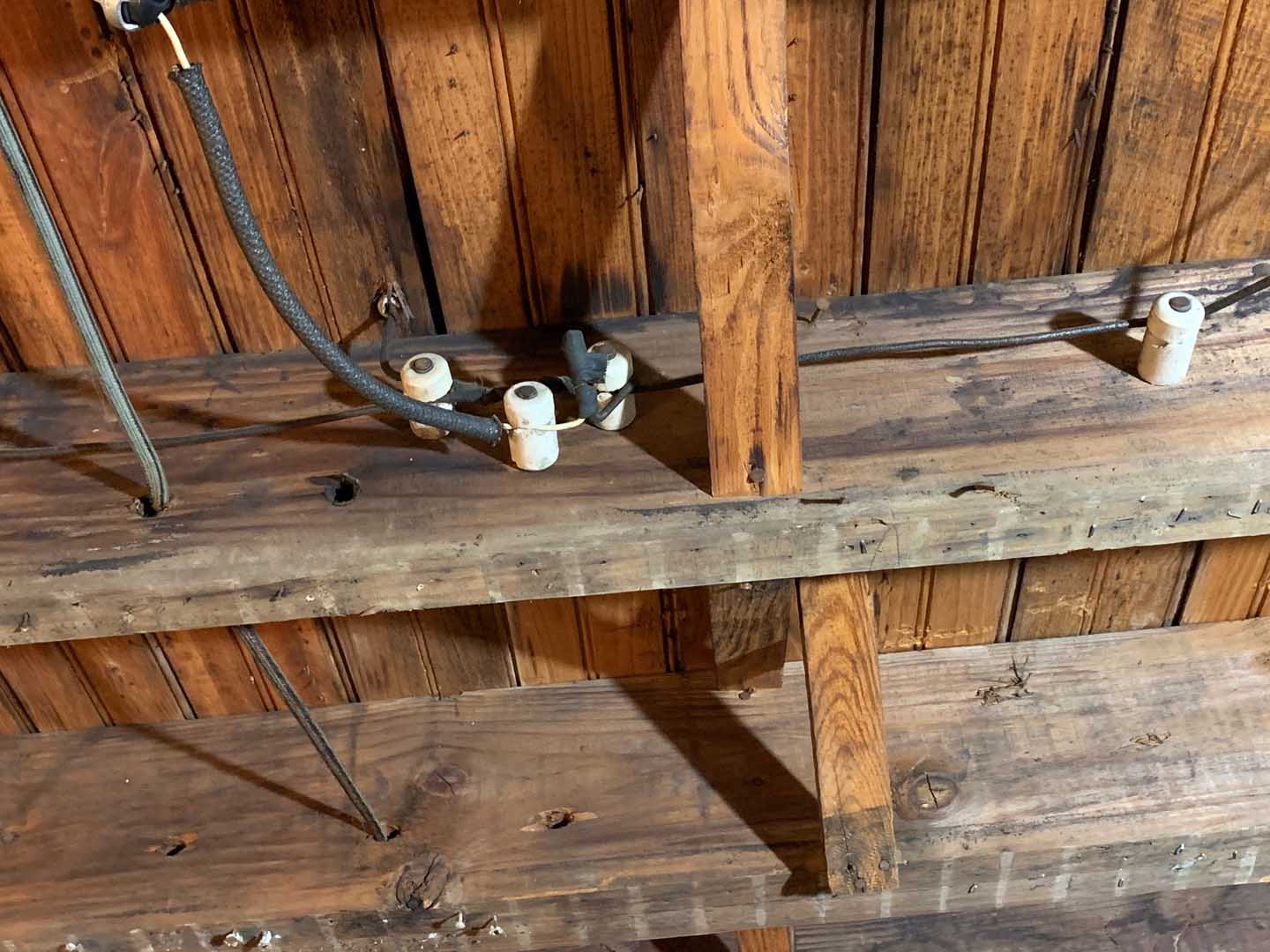
Certain historical wiring types have well-known hazards: knob-and-tube lacks grounding and often has deteriorated insulation, while aluminum wiring can suffer from loosening connections and corrosion at terminations. Knob-and-tube is typically single-insulated conductors routed on ceramic knobs and tubes and offers no ground conductor, making modern appliance use risky; insurance and inspectors commonly require replacement when uncovered during renovations. Aluminum wiring is identifiable by its lightweight, silver-colored conductors and is associated with fire risk where connections oxidize or loosen; special connectors or replacement are recommended. Early armored (BX) or cloth-insulated wires may also show corrosion or brittle coverings that no longer meet current code expectations. If you suspect these types, a licensed master electrician should confirm the wiring type and recommend a repair or full rewiring depending on condition and intended home use.
What Are the Benefits of Upgrading to a Modern Electrical System?

Upgrading to a modern electrical system delivers multiple, measurable benefits: it reduces fire risk through proper grounding and modern breakers, increases capacity to safely power contemporary appliances and EV chargers, and can enhance home value and insurance compatibility. A modern rewiring replaces degraded conductors, installs correct circuit distribution, and upgrades protective devices such as arc-fault and ground-fault breakers that actively prevent dangerous conditions. The result is improved reliability, the ability to add high-draw items like heat pumps or electric vehicle chargers, and fewer nuisance outages. Homeowners also gain peace of mind knowing systems meet the National Electrical Code and Massachusetts inspection standards, which supports resale and insurance considerations.
Upgrading brings safety, capacity, and financial benefits that compound over time:
- Safety Improvements: Proper grounding and modern breaker protection lower fire and shock risk by interrupting faults and preventing dangerous arcing.
- Increased Capacity: Rewiring and electrical panel upgrades allow for additional dedicated circuits and higher service amps to support kitchens, HVAC, and EV charging.
- Home Value and Compliance: Modern electrical systems align with inspection requirements, reduce buyer objections, and can simplify insurance underwriting.
These improvements are realized through specific technical changes—new branch circuits, updated service conductors, and coordinated panel work—which we break down in the table below to clarify homeowner outcomes and priorities.
Different benefits tie to concrete homeowner outcomes and long-term value.
| Benefit Area | What Improves | Homeowner Outcome |
|---|---|---|
| Safety | Proper grounding, AFCI/GFCI breakers | Reduced fire and shock risk; fewer electrical hazards |
| Capacity | Service entrance and panel upgrades, dedicated circuits | Supports modern appliances, EV chargers, and HVAC without nuisance trips |
| Property Value | Code compliance and updated documentation | Easier resale and smoother insurance reviews |
| Reliability | New conductors and modern connections | Fewer outages and more consistent appliance performance |
This table shows how targeted rewiring upgrades translate into everyday safety and functional benefits, and the next section explains cost ranges and what influences the price of a whole house rewiring in Massachusetts.
How Does Whole Home Rewiring Enhance Electrical Safety and Fire Prevention?
Whole home rewiring enhances safety by replacing deteriorated insulation, adding proper grounding, and enabling modern protective devices that detect and interrupt dangerous faults. Modern materials and connector technology reduce overheating, and circuit rebalancing prevents single circuits from carrying excessive loads causing insulation breakdown. Arc-fault circuit interrupters (AFCIs) and ground-fault circuit interrupters (GFCIs) are code-required protections in many areas that directly prevent arc-related fires and shock hazards when installed correctly on rewired circuits. Recent studies and guidance from safety organizations emphasize that removing known hazards like knob-and-tube and aluminum wiring reduces insurance and fire department concerns. Rewiring thus converts theoretical safety improvements into tangible reductions in household electrical risk.
In What Ways Does Rewiring Improve Electrical Capacity and Support Modern Appliances?
Rewiring provides the structured capacity upgrades needed for high-demand modern equipment by installing appropriately sized conductors, redistributing loads across new branch circuits, and coordinating with a service and panel upgrade when required. A typical improvement is adding dedicated 20A circuits for kitchens, 240V circuits for electric dryers, or a 200A service for whole-home capacity and future EV charger planning. Proper circuit allocation avoids shared loads that cause nuisance trips and permits safe simultaneous use of multiple high-draw devices. Rewiring also includes planning for future additions—such as EV chargers, smart-home systems, or HVAC upgrades—so homeowners avoid repeated invasive work later.
How Much Does Whole House Rewiring Cost in Massachusetts?
Typical **electrical rewiring cost** in Massachusetts varies widely based on home size, existing wiring type, accessibility, and whether an electrical panel upgrade is required; a practical range helps homeowners set expectations before requesting an in-person estimate. Early, accurate estimates depend on a site visit that documents home size, existing materials (knob-and-tube, aluminum, cloth), number of circuits, panel condition, and wall access. Additional line items often include permit fees, inspection coordination, drywall repair, and cleanup. The EAV table below compares key cost drivers and their typical impacts to clarify where money is spent and why estimates differ between small bungalows and larger multi-story homes.
Cost drivers that most influence a rewiring budget:
| Cost Factor | How It Affects Cost | Typical Impact |
|---|---|---|
| Home Size & Stories | More wiring runs and outlets increase labor and materials | Significant — larger homes cost more |
| Wiring Type | Hazardous types require full removal and replacement | High — knob-and-tube/aluminum add complexity |
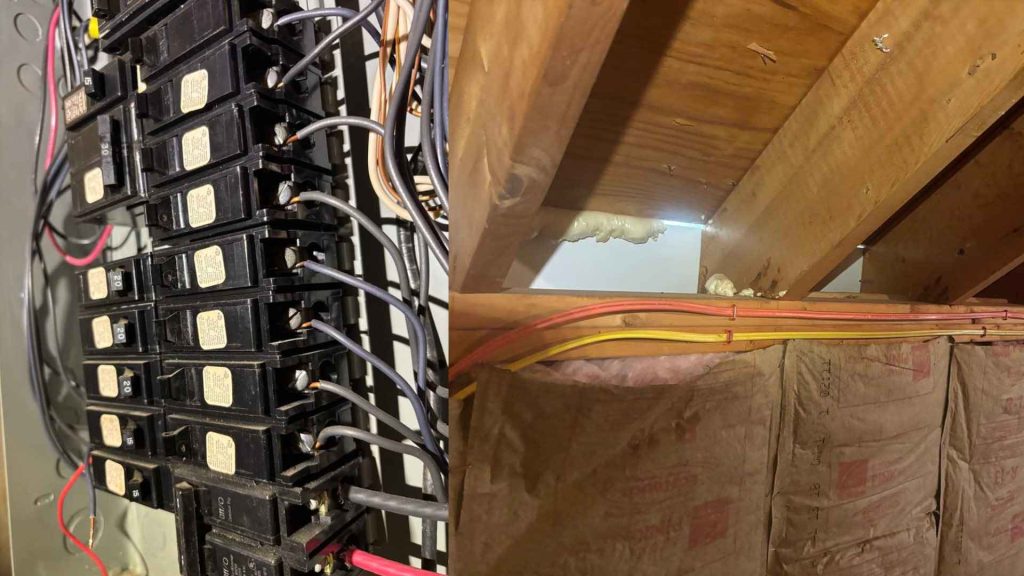
| Panel Upgrade | 200A upgrade or service changes add equipment and labor | Moderate to High — essential for capacity increases |
| Accessibility | Finished walls, plaster, and tight spaces increase repair work | Moderate — increases time and restoration costs |
| Permits & Inspections | Municipal fees and required inspections add fixed costs | Low to Moderate — administrative and scheduling impact |
Understanding the **cost for rewiring old house** projects and their drivers makes clear why two homes in the same neighborhood can receive very different estimates; the next subsection explains how homeowners can get a free, transparent estimate and what that estimate typically includes.
What Factors Influence the Cost to Rewire a House in Amesbury MA?
Several interrelated factors drive the total **price to rewire a house**: square footage and floor count determine material and labor quantities, while existing wiring types (knob-and-tube, aluminum, BX) determine removal difficulty and disposal. Accessibility—whether walls are drywall or plaster/stucco, presence of attics and crawl spaces, and finished basements—affects how much finish repair is required and thus the restoration bill. Required panel upgrades, meter relocation, or service entrance work add equipment and coordination with the utility. Regional permit and inspection timelines can also extend labor scheduling and thereby influence the final cost. Collectively, these elements explain why a small bungalow with open access may be substantially less expensive than an older multi-story home with plaster walls and extensive knob-and-tube removal.
Homeowners should use this understanding to compare estimates and to ask targeted questions about the overall **home rewiring cost**, scope, included repairs, and permit handling.
How Can Homeowners Get a Free, Transparent Rewiring Estimate from Stag Electric?
To obtain an actionable estimate, homeowners should request an on-site assessment that includes a visual wiring survey, documentation of wiring types and panel condition, and a written scope outlining necessary circuit work, panel upgrades, expected permit handling, and a timeline, giving a clear **electrician rewiring cost** breakdown. Stag Electric offers free estimates that include a site assessment, a proposed scope of work, and handling of permits and inspections as part of the project planning, giving homeowners clarity on costs and scheduling. Expect the estimator to note restoration needs (drywall or plaster repair) and to provide options—partial remediation versus full rewiring—so you can weigh safety vs. budget. Typical turnaround for a written estimate after an inspection is provided by the estimator during the visit, and clear comparison of line-item costs supports transparent decision-making.
This transparent estimate process helps homeowners make informed choices and reduces surprises during project execution.
What Is the Whole Home Rewiring Process with Stag Electric?
A clear, staged process reduces homeowner disruption and ensures code compliance: assessment, planning and permits, then installation with testing and inspection. This three-phase approach balances efficient sequencing with necessary municipal interactions—permits, inspector sign-offs, and final documentation—so homeowners remain informed at every step. Minimizing disruption is achieved through staged installation, dust-control protocols, and focused wall repairs, while technical compliance is maintained through adherence to NEC and Massachusetts inspection requirements. Below is a concise three-step summary suitable for homeowners who want an at-a-glance process roadmap before reading the detailed steps that follow.
Rewiring is typically executed in three high-level phases:
- Assessment: Detailed site survey, circuit mapping, and identification of wiring types and panel condition.
- Plan & Permits: Create a scope, obtain municipal permits, and schedule inspections and utility coordination.
- Installation & Inspection: Staged wiring replacement, panel upgrades if needed, final testing, and inspector sign-off.
These steps are coordinated to deliver consistent timelines and minimal disruption to family life, with expected durations discussed in the next section.
Different stages of the rewiring process require different tasks and homeowner preparation.
| Phase | Who/What | Duration & Homeowner Impact |
|---|---|---|
| Assessment | Licensed electrician inspects and documents wiring | 1–2 hours; homeowner provides access and documentation |
| Permits | Contractor prepares paperwork and submits to authority | Variable; often days to weeks depending on municipality |
| Installation | Staged crews perform wiring, panel work, and testing | Typical project 3–7 days for many homes; homeowner experiences focused disruption and daily cleanup |
| Inspection | Municipal inspector verifies compliance and signs off | Final approval required before system return to full use |
This process table shows roles, typical durations, and expected homeowner impacts; the next subsections describe the key steps and how disruption is minimized in practice.
What Are the Key Steps from Assessment to Installation?
The initial step is a thorough site visit where the electrician maps circuits, documents wiring types, and identifies access points, which sets the scope for permits and labor planning. After the assessment, a detailed schematic and costed proposal is prepared, and the contractor handles permit submissions and inspector coordination to ensure work proceeds on a compliant timeline. Installation is staged to maintain power to critical circuits where possible, with crews running new branch circuits, updating the service entrance as needed, and coordinating panel upgrades. Final testing includes continuity, grounding verification, and AFCI/GFCI checks, followed by inspector review and any required corrections. Homeowners are advised to prepare by clearing work areas and planning temporary power needs; Stag Electric commonly completes many residential projects in a typical 3–7 day window depending on size and access.
This stepwise approach ensures predictable progress and clear communication through each permit and installation milestone.
How Does Stag Electric Minimize Disruption and Ensure Code Compliance?
Minimizing disruption involves strategic staging, targeted access points that limit wall openings, dust-control measures, and a commitment to repair work so homeowners regain finished spaces quickly after wiring work concludes. Stag Electric offers a minimal wall damage guarantee and cleanup protocols to reduce restorative work; crews use containment, drop cloths, and daily cleanups to protect living spaces. For code compliance, the company prepares permit submissions, schedules inspections, and coordinates any necessary utility interactions, relying on licensed electricians familiar with Massachusetts and New Hampshire licensing and local inspector expectations. These combined practices reduce homeowner stress and create a documented, code-compliant path from assessment through final sign-off. If you want to move forward, request a free estimate or schedule service to begin the permit and planning process.
Why Should Amesbury Homeowners Choose Stag Electric for Electrical Panel Upgrades and Rewiring?
Choosing a provider for whole-home rewiring depends on licensing, documented experience with older-home wiring, and local reputation for clean, timely work—attributes that reduce project risk and improve outcomes. Stag Electric holds MA Master Electrician License #23397-A and NH State Electrical Corporation License #15353, credentials that matter for permit submissions and inspector coordination. Local expertise in Amesbury and the North Shore ensures familiarity with common regional wiring issues and municipal processes, which shortens timelines and reduces unexpected permitting delays. Homeowners should prioritize licensed teams that offer transparent estimates, minimal wall damage commitments, and clear communication throughout the project lifecycle.
Homeowner trust is reinforced by consistent customer feedback themes and service guarantees:
- Licensing and code knowledge help projects pass inspections and meet Massachusetts standards.
- Local experience with knob-and-tube and aluminum wiring replacements reduces diagnostic delays.
- Service guarantees and clear cleanup protocols limit finish repair scope.
These factors help homeowners choose a contractor who will deliver both technical compliance and respectful jobsite practices.
What Licenses, Experience, and Local Expertise Does Stag Electric Offer?
Stag Electric is licensed with MA Master Electrician License #23397-A and NH State Electrical Corporation License #15353, credentials that allow the company to manage permit submissions and inspections across state lines where service is provided. The team’s local experience across Amesbury, Newburyport, and surrounding MA, NH, and ME communities means they regularly work with municipal inspectors and understand local construction practices, which reduces administrative friction. Experience in replacing knob-and-tube, switching out aluminum conductors, and performing BX wiring replacement equips the crew to recommend the appropriate scope—full rewiring versus targeted remediation—and to plan restoration work that minimizes homeowner disruption. These licensure and experience elements are fundamental to reliable, code-compliant rewiring projects.
What Do Customer Testimonials and 5-Star Reviews Say About Stag Electric’s Services?
Public reviews consistently highlight reliability, clear communication, and a clean jobsite, which are critical for projects that involve home interior access and restoration work. Homeowners commonly note on-time arrival, transparent estimates, and thorough cleanup—traits that align with Stag Electric’s minimal wall damage guarantee and commitment to permit handling. Reading multiple reviews gives a practical sense of how teams perform on rewiring projects where timelines, cleanup, and adherence to scope matter most. Prospective customers can use these themes to evaluate contractors, looking for consistent references to code compliance, timely inspections, and respectful jobsite behavior as indicators of quality.
This social proof reinforces technical credentials and helps homeowners choose a contractor whose practices align with safety and respect for finished living spaces.
What Are the Frequently Asked Questions About Whole Home Rewiring in Amesbury?
Homeowners commonly ask about timelines, safety, and the average price to rewire a house, as well as whether specific wiring types must be replaced; concise answers reduce uncertainty and guide next steps toward scheduling an inspection and estimate. Below are direct answers to the most frequent questions that help set realistic expectations around project duration, insurance implications, and the necessity of knob-and-tube removal. These responses aim to provide clear, actionable guidance so homeowners know when to call a licensed electrician and what to expect during the permitting and inspection phases.
How Long Does Whole House Rewiring Typically Take?
Typical timelines for rewiring whole house projects depend on home size, access, and the scope of work, but many single-family homes can be completed in a focused 3–7 day window when access is reasonable and no major structural repairs are needed. Smaller bungalows with attic or crawlspace access tend toward the shorter end, while multi-story homes with plaster walls or extensive knob-and-tube removal extend the schedule. Time is also consumed by permit turnaround and municipal inspection scheduling, which can add days or weeks before installation begins. Homeowners should plan for staged work that maintains critical circuits where possible and prepare by clearing access areas; communicating with the contractor about expected daily windows helps families manage temporary disruptions.
Is Knob-and-Tube Wiring Replacement Necessary for Safety?
Knob-and-tube wiring presents safety concerns because it lacks grounding and its insulation often degrades with age, increasing the likelihood of overheating and fire; for these reasons, replacement is commonly recommended or required during renovations, impacting the overall rewire entire house cost. Insurance companies and building inspectors frequently insist on removal or remediation when knob-and-tube is present, especially if the home is being remodeled or circuits are overloaded by modern appliances. Replacement decisions depend on inspection findings: isolated, intact runs in unused areas might be handled differently than pervasive, degraded networks feeding occupied circuits. When replacement is advisable, a full rewiring restores grounding, modern connectors, and proper circuit distribution to meet contemporary safety standards.
Homeowners concerned about knob-and-tube should request a dedicated inspection and a transparent estimate that documents recommended actions and associated costs.
Stag Electric provides free estimates and manages permit and inspection coordination so homeowners can safely and confidently rewire the house, moving from assessment to compliant installation. Request a free estimate or schedule service to document wiring conditions, obtain a written scope including permit handling, and begin the permit process; this step helps ensure safety, code compliance, and minimal disruption through coordinated staging and cleanup protocols. Stag Electric’s local licensing, minimal wall damage guarantee, and experience with knob-and-tube and aluminum wiring replacements position homeowners to complete necessary upgrades with professional oversight and clear timelines. Request a free estimate or schedule service now to get a site assessment, written scope including permit handling, and an expected project timeline tailored to your Amesbury home.